

Travel Behaviour and Mode Choice
Policy is written for people who are paying attention. Most travellers are on autopilot.
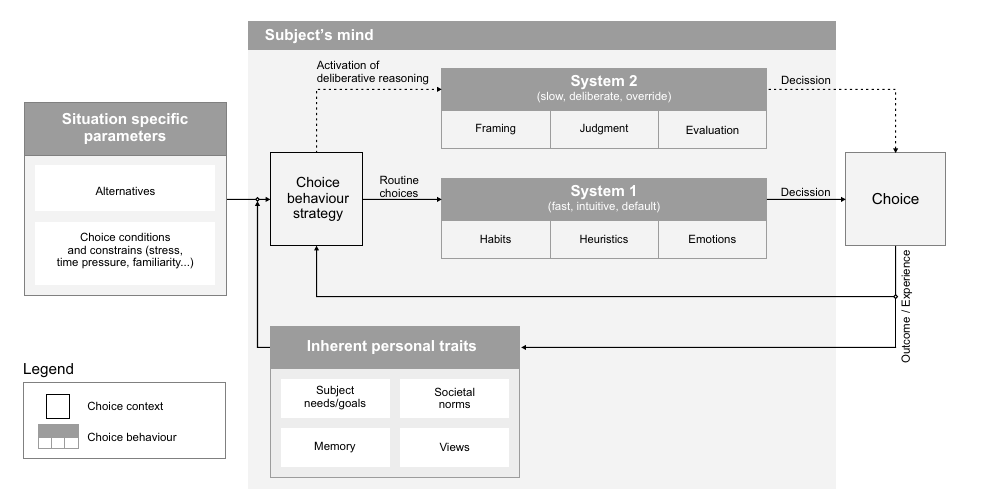
- Gated dual-process choice
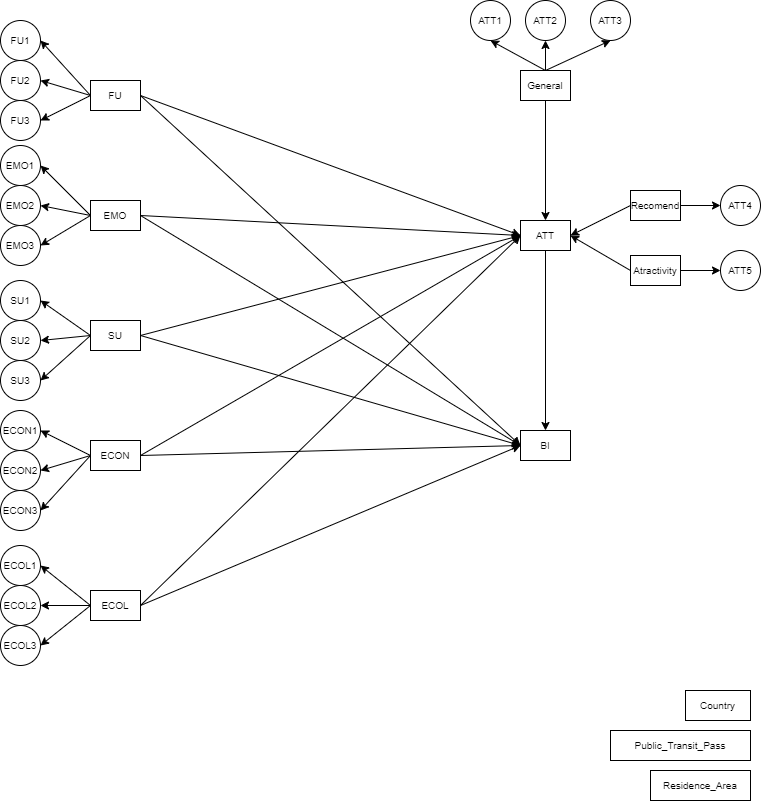
- Discrete and hybrid choice
- Logistic regression
- SHAP and explainable AI
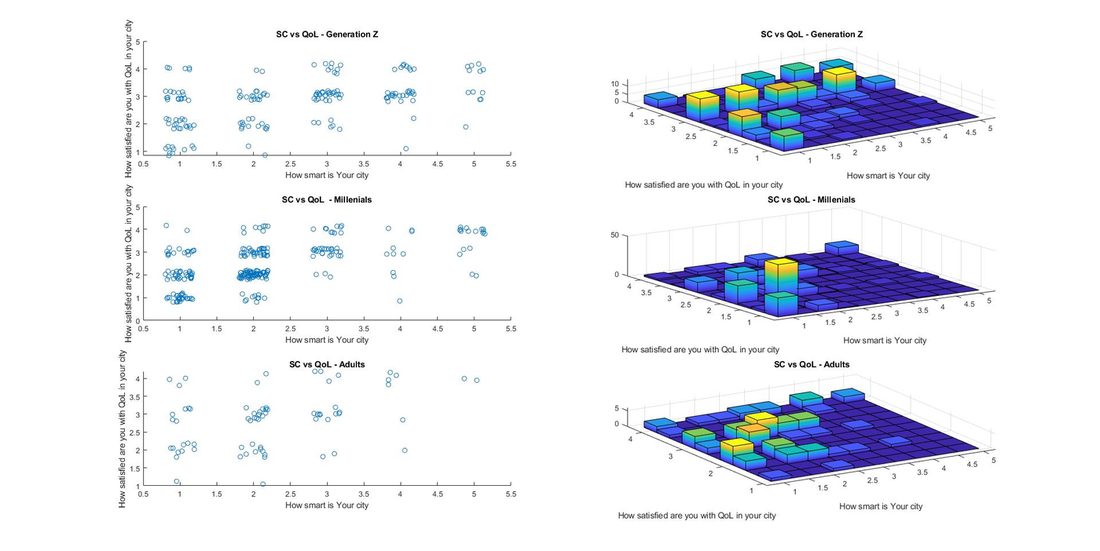
- MaaS across four countries
- Driving simulator with eye tracking
A measure only reaches the people whose deliberation it activated
Make an alternative faster, cheaper or cleaner and you have improved its attributes. That improvement reaches travellers who are actually weighing options. For most people on most trips, the choice never reaches deliberation at all — it is resolved by habit before any attribute is consulted.
This is not a footnote about psychology. It is the difference between a measure that works and one that is quietly wasted, and it explains two things practitioners observe but rarely model: why soft measures underperform their business cases, and why a disruption — a closure, a strike, a new line — is a window in which behaviour can actually be changed. The window closes as the new pattern becomes habitual.
The second reason this pillar exists is forecasting. Mobility as a Service, Mobility on Demand and automated shuttles have no revealed-preference record to fit, because in most markets they do not yet exist. Stated preference combined with a behavioural model that knows when deliberation is active is the only defensible route to an adoption forecast — and we have both the instruments and the model.
Scientific contribution
- Cognitive-system activation as a latent, state-dependent variable. A gated dual-process formulation, so a model can tell you who is reachable by a given instrument — instead of assuming one decision rule fits every traveller and every context.
- Forecasting services that have no history. An adoption forecast for a service with no revealed-preference record, built from stated preference plus the gated model rather than from an analogy to something else.
- A three-way distinction most papers skip. Whether a psychological mechanism is structurally represented in a model, merely approximated by a statistical structure, or only behaviourally interpreted from its outputs. Many published claims are the third kind presented as the first.
- Explainability as a precondition, not a garnish. SHAP attribution on deep neural network mode choice, using cooperative game theory to obtain exact feature contributions.
Operational evidence
A mixed choice model of potential MaaS users with explicit parameter sensitivities — so a city can ask whether MaaS in its market would feed public transport or compete with it, rather than accepting a generic answer.
The intention–behaviour gap quantified for habitual car users: the number a soft-measure business case needs and almost never has. Plus a monograph of Czech mode-choice models and results.
Our own instruments: stated- and revealed-preference survey design, focus groups feeding survey design, a driving simulator with eye tracking, and instrumented-vehicle recording.
- Methods used here
- M1 Discrete · hybrid · mixed logit · logistic regression · SEM
- M2 Deep networks · SHAP
- M3 Survey design · small-sample statistics
- All six groups →
The gate, and what it implies
A note on the driving simulator
It belongs here when the question is behavioural — perception, compliance, trust, handover. Its control applications, such as designing and evaluating a variable speed limit algorithm, belong to Pillar 1. The instrument is shared; the research question decides which pillar owns the output.
Projects behind this pillar
| Project | Funder and identifier | Period | Our role | Pillar |
|---|
Publications
Every entry links to its DOI. Open-access items are marked and can be read without a subscription.
Who we want to hear from
| We are looking for | What we would contribute | Target instruments |
|---|---|---|
| MaaS, MoD and shared mobility operators and cities | Adoption forecasts for a service with no local history; complementarity versus competition analysis for a specific market | EIT Urban Mobility · Horizon Europe Cluster 5 |
| Behavioural and choice modelling groups | The gated dual-process operationalisation, a shared language for what a model may claim, and multi-country datasets | Horizon Europe · joint doctoral supervision |
| CCAM consortia needing an acceptance work package | Behavioural instruments, survey infrastructure, and the cognitive framework to interpret the results | CCAM Partnership · Horizon Europe Cluster 5 |
| Behavioural change and soft-measure programmes | Who is reachable, what the realistic effect size is, and when the window of opportunity is open | Interreg · Mission on Climate-Neutral Cities |